What is woodls, in a line?
A network of ordinary computers that run open-source AI for each other. Yours works while you’re away and ripens seeds; you spend them when you need AI.
What’s a woodl?
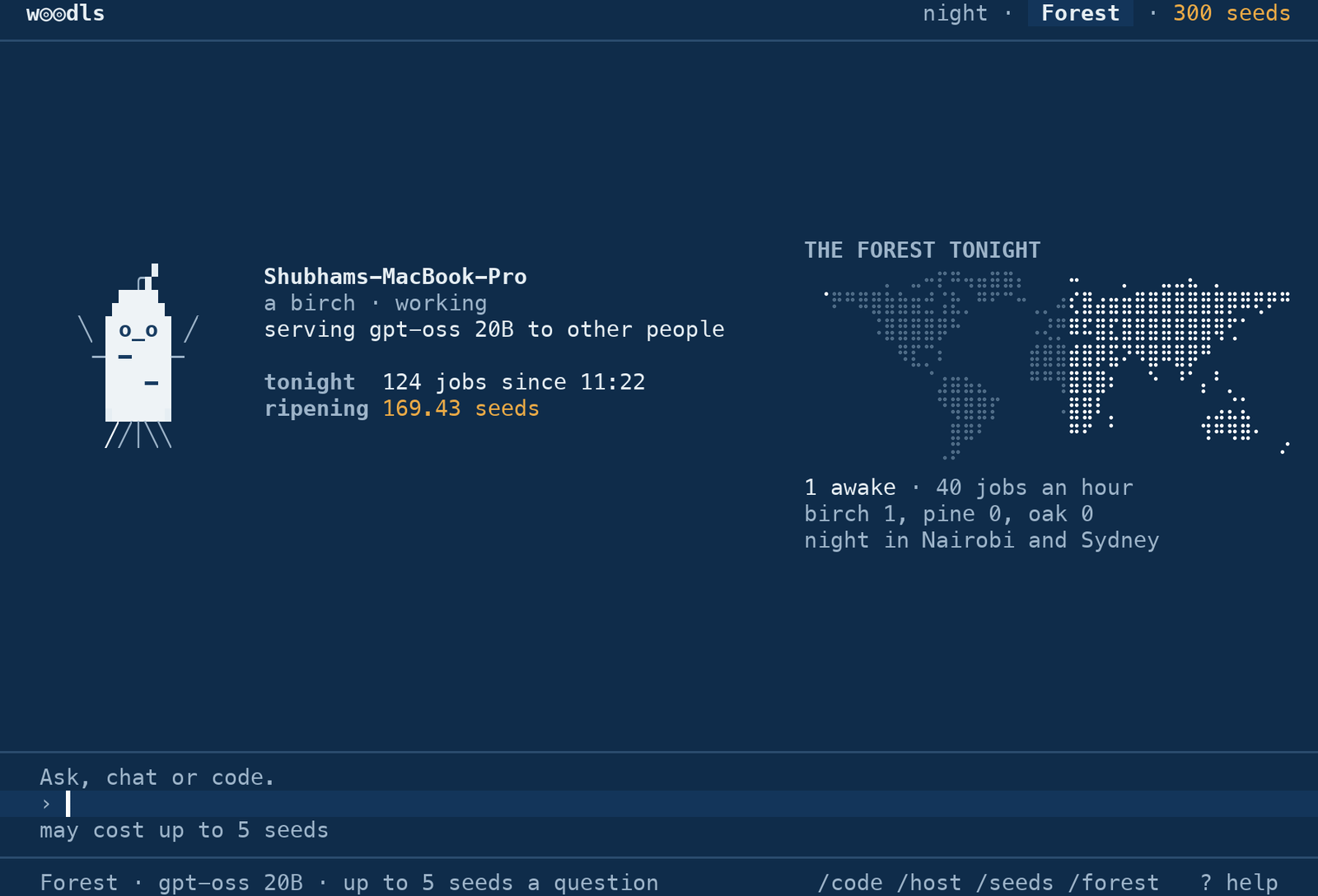
Your computer, in the forest: a birch if it’s a Mac with Apple silicon, a pine if it’s a PC with an NVIDIA card, an oak if it’s any other computer. You name it when you register, and it keeps the name.
What can I do with it?
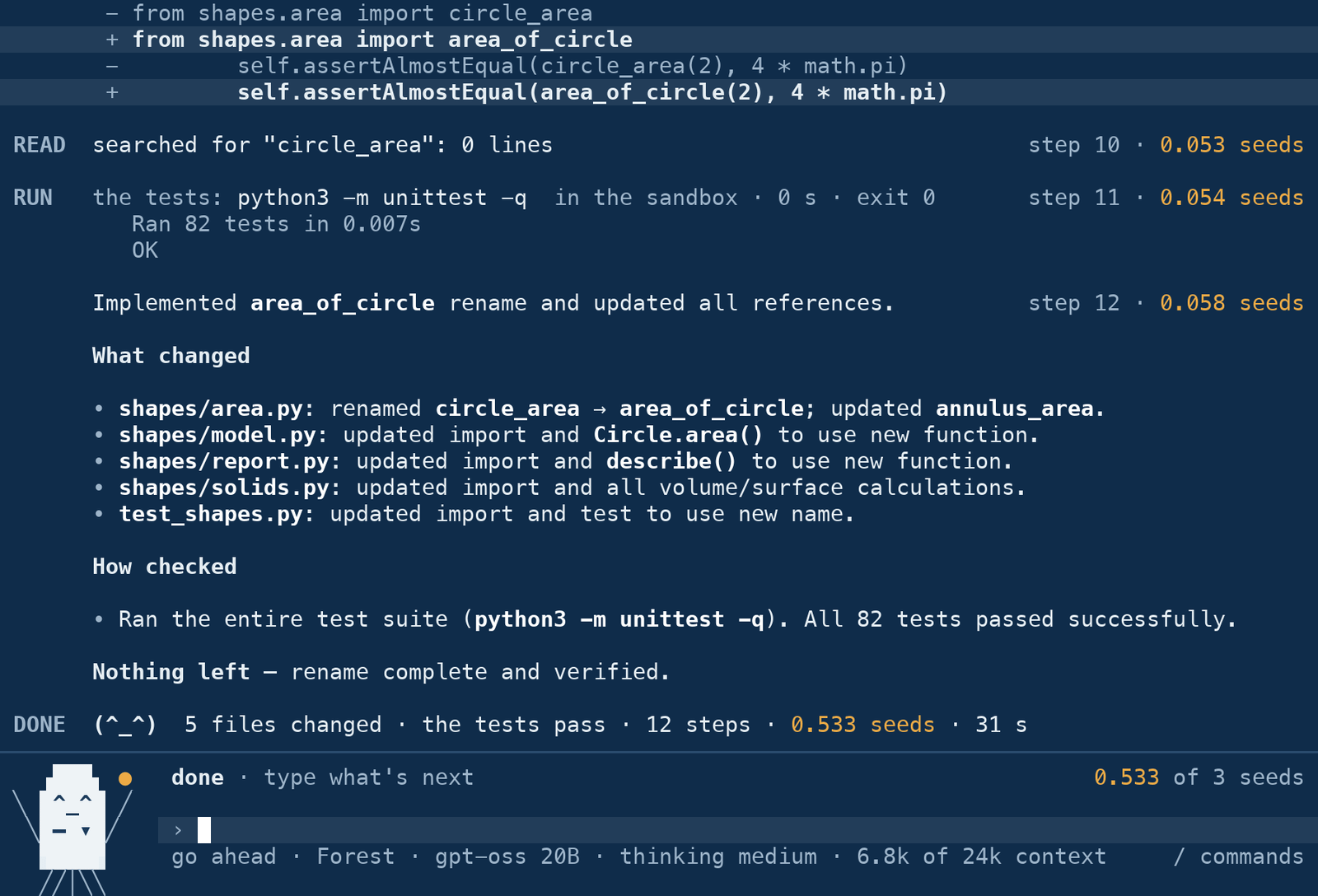
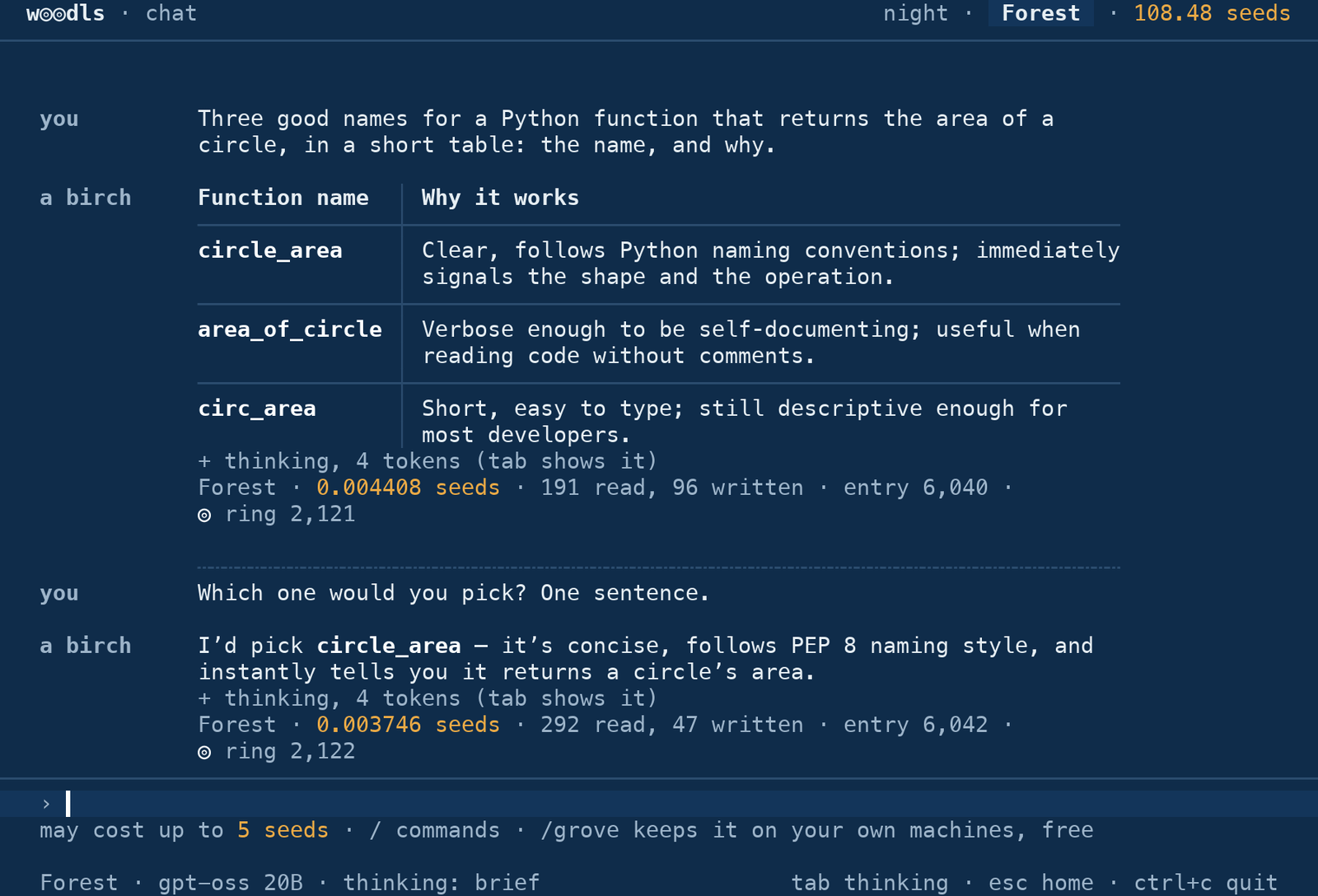
Ask and chat with open models from your terminal, and code with the carver, which reads, edits and tests code in your project. Lend your Mac while you sleep to ripen the seeds that pay for it, or put your own machines in a grove, where they serve each other for free.
Is it free?
Registering is free, and so is everything in a grove. In the Forest each answer costs seeds, which your computer earns for every night it lends. You pay with your computer’s time and your electricity, not with money.
Is this crypto?
No. Seeds are a credit for AI on woodls. They can’t be bought, sold, traded or cashed out, and there’s no coin and no blockchain. Every seed is written on the Rings, a ring ledger anyone can check.
Can the computer that answers read my question?
Yes, in the Forest it can. So woodls takes out secrets, email addresses, your home folder’s path and your git name before anything leaves your machine, and never tells the host who you are. For private work, use a grove: your own machines, where woodls sees nothing.
Will it slow my computer down?
Not while you’re using it. It works only while you’re away: when you touch the keyboard it steps aside in 47 to 151 ms (our tests, one MacBook Pro, 26 September 2026), and when a game or a video app needs the graphics chip, it lets the model go.
Which computers can take part?
For the first night, Macs with Apple silicon and 16 GB or more, because their sandbox is built. PCs with an NVIDIA card, and computers without one, join when the Linux sandbox is ready (COMING). The woodls command itself runs on Macs today.
Why is there a screening, and when does it start?
The first night is small on purpose: 25 hosts on two continents, for 72 hours, with every job checked. We read every registration and invite in small waves, by machine and country, so each wave has the mix it needs. The first invites are planned for around Diwali, 8 November 2026, and your code comes by email, from a person. The night’s own hours are written on the first night’s page once they’re certain.
What do you keep about me?
Your email address and your woodl’s name, until you’re invited or for 90 days, whichever comes first, and which computer your woodl will be, if you say. Nothing about your visit is kept with them, and there are no trackers. The privacy page has the rest.





 01 · NightLend. While you sleep, your woodl runs open-source AI models for other people. Touch the keyboard and it steps aside, in 47 to 151 ms in our tests.
 02 · MorningRipen. Every job it runs ripens seeds: a credit for AI that you can’t buy or cash out.
 03 · DaySpend. When you need AI, spend them in your terminal: a chat with open models, and the carver, a coding agent that says what it spent. A computer that’s free answers, often one where it’s night.